I'm a huge fan of the Flavia deLuce mystery series by Canadian author Alan Bradley. At the
end of the fifth book in the series, Speaking from Among the Bones, there was a major cliffhanger, and I could not wait until the next book appeared.
Several months ago while browsing NetGalley, I saw that I could request the advanced ebook of The Dead in Their Vaulted Arches. I did so, and quickly downloaded it. When I downloaded it there was a note that reviews could not be published until closer to the release date, so I'm just now writing the review, but actually read the book several months ago. I was afraid that I might forget key elements, but I have to say that this is a book that's sticking with me.
Often in a long-running mystery series the author starts to run out of steam. At the end of the 5th book I was a bit concerned that this might be the case, but I was pleased to find that this is not so.
I don't want to give too much away for those who read the previous book and are eagerly anticipating the resolution of the cliffhanger, so I'll try to be careful. The story starts with the entire deLuce family at the train station waiting for the return of Harriet, Flavia's mother who disappeared when Flavia was a baby.
At the station a stranger gives Flavia a cryptic message, then is immediately killed by an oncoming train. Long-lost relatives with secrets also make an appearance. Flavia discovers a home movie that may provide clues to these events, as well as answer some questions about Harriet and her family. Flavia's Aunt Felicity is also on hand to fill in some parts of the family story.
By the end of the novel, Flavia is ready to face a brand-new adventure, and I look forward to joining her. Bradley has taken a series that was starting to become a bit stale and reinvigorated it by resolving many questions and taking it in a different direction. I wish that more mystery series writers would take this approach.
Showing posts with label Book Review. Show all posts
Friday, December 27, 2013
Monday, August 05, 2013
Texts from Bennett
As the mother of a 28 year-old son, I've heard my share of rap music.
Mostly when he was in
high school and I was driving him back and forth to his various activities. I'm not a huge fan, and I especially have issues with the misogynistic aspects of the medium.
Now that I'mstalking following him on Facebook, I'm still aware of where his musical tastes lie, and from time to time he made mention of a rapper named Mac Lethal,a white rapper from the Kansas City area.
One day while browsing the new ebooks for review on NetGalley, I saw that Mac had a new book coming out, and I decided that I had to read it.
Texts from Bennett is the story of Mac, and how he opened his home to his opiate-addicted aunt Lillian, her conspiracy theorist boyfriend Tim, and her 17 year-old gangsta son, Bennett, who claims to be 13% black (he's not).
The story unfolds through Mac's narration, interspersed with texts between Mac and Bennett. As might be expected, the arrival of his family causes no small amount of disruption in Mac's life, especially in his relationship with new girlfriend Harper. But Mac begins to see another side of his family, and when he learns more about his Aunt Lillian's (and his own mother's) dysfunctional family he begins to appreciate them more.
There's a lot of really offensive language in Texts from Bennett, as well as a lot of drug use. But if you can get past that, it's really a good story. Mac learns to see another side of Bennett, and both Mac and Bennett grow from the experience of spending time together. So while I don't think any friends my age would enjoy reading Texts from Bennett, I think young adults who share my son's enthusiasm for hip-hop culture would like this book.
Mostly when he was in
high school and I was driving him back and forth to his various activities. I'm not a huge fan, and I especially have issues with the misogynistic aspects of the medium.
Now that I'm
One day while browsing the new ebooks for review on NetGalley, I saw that Mac had a new book coming out, and I decided that I had to read it.
Texts from Bennett is the story of Mac, and how he opened his home to his opiate-addicted aunt Lillian, her conspiracy theorist boyfriend Tim, and her 17 year-old gangsta son, Bennett, who claims to be 13% black (he's not).
The story unfolds through Mac's narration, interspersed with texts between Mac and Bennett. As might be expected, the arrival of his family causes no small amount of disruption in Mac's life, especially in his relationship with new girlfriend Harper. But Mac begins to see another side of his family, and when he learns more about his Aunt Lillian's (and his own mother's) dysfunctional family he begins to appreciate them more.
There's a lot of really offensive language in Texts from Bennett, as well as a lot of drug use. But if you can get past that, it's really a good story. Mac learns to see another side of Bennett, and both Mac and Bennett grow from the experience of spending time together. So while I don't think any friends my age would enjoy reading Texts from Bennett, I think young adults who share my son's enthusiasm for hip-hop culture would like this book.
Monday, February 18, 2013
A Glass of Blessings
I don't remember exactly when I read my first Barbara Pym novel, but I think I was in my 20's. I eventually read all 12 of her novels (here's a complete list of her published novels), but it was a long time ago. In the past few years I've suggested her novels to friends and fellow Anglophiles, but no one to whom I had suggested them fell in love with them as I did.I'd been thinking that I'd like to read them again when I learned that A Glass of Blessings was about to be reissued in an ebook format. I vaguely remembered that this was my favorite of Pym's novels. Along with the Pym's characteristic bittersweet tone I also picked up on a strain of humor that I enjoyed. I received an advance galley through NetGalley, and started reading it on my nook.
A Glass of Blessings is the story of a young English woman, Wilmet Forsythe, who lives with her husband Rodney and his mother Sybil in London. With nothing to occupy her time, Wilmet becomes involved with the parishioners of the neighborhood church she has started to attend. This colorful cast of characters includes elderly Father Thames, a collector of fine art, mild and dumpy Father Bode, and the newest assistant, Father Ransome, who cuts a rather dashing figure. Rounding out this group are Mary Beamish, a young woman devoted to good works, and Wilf Bason, the new cook for the Clergy House. In addition, Wilmet also feels drawn to Piers Longridge, the ne'er-do-well brother of her dear friend Rowena. When Piers seems to take an interest in her she is flattered, but Piers' secretive life complicates the relationship.
Like all of Pym's works, A Glass of Blessings is a quiet slice-of-life story about a specific class of people in post-war England. Nothing too serious ever happens, and the characters are interesting, if not particularly deep. What I appreciate about these stories is that they take me to another time and place where I can spend an enjoyable few hours. I'm looking forward to re-reading more of Pym's novels, and hope that more will be reissued in digital format.
Speaking from Among the Bones
As an Angolphile and mystery lover, I'm an avid fan of British mysteries. A fairly recent author to my list of favorites is Alan Bradley, the Canadian author of the Flavia deLuce mysteries. Speaking from Among the Bones is the fifth in the series, and when I saw that it was available in an ebook galley through NetGalley I eagerly requested it.
And I was not disappointed. Flavia is a young girl who lives on an estate with her father and two older sisters. Flavia's mother, an adventurer named Harriet, disappeared while mountain climbing in the Himalayas when Flavia was a baby. To escape the torment of her sisters, Flavia has staked out territory in an unused portion of their mansion, a fully-equipped chemistry lab, which was the pride and joy of a previous deLuce. Despite her tender years, Flavia has become quite knowledgeable about chemistry, and is particularly skilled in the creation and use of poisons.
Flavia also has the uncanny luck of stumbling upon dead bodies. While attending the unearthing of the bones of Saint Tancred, for whom the local parish is named, the body of the missing choir director is discovered. Flavia uses her sleuthing abilities to find his killer, and uncovers some long-held secrets of her small village in the process.
The Flavia deLuce mysteries are intriguing, fast-paced stories filled with interesting and complex characters. This one was especially interesting given the surprising cliff-hanger at the very end, and I will be anxiously awaiting the next installment.
Sunday, February 17, 2013
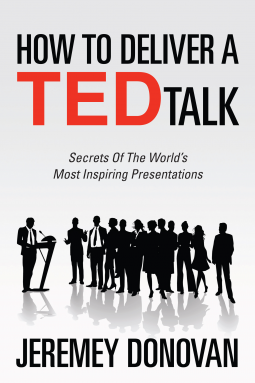
How to Deliver a Ted Talk
I'd like to start out by saying that I know I'll never deliver a Ted Talk. For those of you unfamiliar with Ted Talks, I'll direct you here. Ted stands for "technology, entertainment, and design," and the Ted Talks are from two annual conferences that " bring together the world's most fascinating thinkers and doers, who are challenged to give the talk of their lives (in 18 minutes or less)." The talks are available online for viewing, and cover a wide variety of topics.
While I'd like to think that I have words worth imparting to the world, I'm enough of a realist that I know this isn't the case. One day a colleague and I had just been discussing Ted Talks and the unlikelihood of our ever being asked to present one. Later that day I was browsing through the NetGalley list and found How To Deliver a Ted Talk: Secrets of the World's Most Inspiring Presentations by Jeremey Donovan. I jokingly told my colleague that I should read it so that I would know how to deliver my talk when asked. We laughed, but then I decided I wanted to see what the author had to say, so I downloaded the book.
At 111 pages (in ebook galley form), it's a quick read. Chapters cover how to select a topic, how to build your speech, how to master your delivery, and how to overcome your fear. Donovan is also a realist, and knows that most of his readers will never deliver an actual Ted talk, but encourages anyone who may ever need to address a group to use the book as a guide to more effective public speaking.
As a former member of my college forensic team I've long enjoyed public speaking, and I appreciated Donovan's book for succinctly laying out the design for how to prepare a speech. How To Deliver a Ted Talk by Jeremey Donovan would be a useful addition to any public library collection.
Tuesday, January 01, 2013
Mad Men, Mad World
![]() |
| My "MadMen Creation |
I saw this title while browsing through Net Galley, and since I'm a pretty big fan of the AMC series "Mad Men," I thought I'd like to read it. Knowing that it was published by a university press, I expected that it would be an academic analysis of the show, but that it would also be of interest to the casual reader. I'm sorry to say that this was not the case. Occasionally I was able to get past the academic posturing and find interesting ideas and thoughts, but on the whole it was a bit too pedantic for this pedestrian reader.
Each chapter analyzes different issues raised by the show, focusing mostly on class, race, and gender. Because each chapter was written by a different contributor I found that there was a lot of overlap of subject matter, and many times the same viewpoint was presented more than once.
It seems that this book is designed to be a textbook for use in media studies classes; if that's the case I can see that it would be valuable as a background to classroom lectures and discussion. But for your average, not-too-bright TV fan like me, it was a bit overwhelming.
Monday, June 25, 2012
The Boxcar Children: Beginning
"One warm night four children stood in front of a bakery. No one knew them. No one knew where they had come from." So begins The Boxcar Children by Gertrude Chandler Warner. I first heard this story in second grade when my teacher, Mrs. Harris read it to our class. I was enthralled by the story of the orphaned Alden children, Henry, Jessie, Violet, and Benny and the home they made in an abandoned boxcar, furnished with items found in the dump.
Though their parents are dead, the children are not entirely without family. Grandfather Alden, their father's father, is still alive, but due to a falling out with their father years ago, they have never met the man. Well, the story ends (spoiler alert) with the Grandfather turning out to be a kindly, wealthy man who takes them in and raises them, moving their boxcar into his large backyard.
Chandler wrote this and 18 more stories about the Boxcar children. At her death, the publisher, Albert Whitman continued the series with several different authors. First published in 1942, they are still popular today.
Now well-known children's author Patricia MacLachlan (Sarah, Plain and Tall) has written a prequel to the series. The Boxcar Children: Beginning establishes the Alden children on a farm with their loving parents Kate and Ben. It's the Depression and times are tough, but the Aldens are a loving and generous family, sharing what they have with any strangers who wander by. When a family on its way to move in with relatives has car trouble right in front of the Alden's farm, they wind up staying for several weeks, becoming close friends with the Aldens.
The estrangement from Grandfather Alden is explained by the fact that Ben decided to live on Kate's family farm rather than going into business with his father. When Ben and Kate are killed in a car accident the children are faced with the choice of going to an orphanage, going to live with their mean grandfather, or heading out on their own. The story leaves with them setting out for parts unknown, eventually arriving in front of the bakery.
Basically, MacLachlan does a good job of telling the story. Written with a vocabulary and style suitable to the early chapter-book readers who have read the original story, she establishes the background of the Alden children in a style similar to Warner's, albeit a tad more saccharine in spots. My major issue is that the death of the parents seems almost anti-climactic, and the children's reaction is almost too stoic. I understand that the story is for younger readers, and there might be concern about traumatizing them, but I think a little stronger reaction to their death might have been okay. Overall, I felt this was a good story about a loving family, and a good way to explain how the Boxcar Children their start. I would suggest that children still read the original stories first.
I read this as an Advance Reader copy on my ereader from Net Galley, so by the time the final edition comes out in September there may be changes in content and style.
Sunday, June 17, 2012
Overdressed: The Shockingly High Cost of Cheap Fashion
You wouldn't know this by looking at me, but I love fashion. From Barbie dolls in my childhood to Seventeen magazine as a teen, and more recently, my Project Runway" obsession, I've always loved looking at clothing and imaging having a fantastic wardrobe. Fortunately, I had a grandmother who was an expert seamstress, so many of my clothes came from her, then as I got older, I was able to make many of my own clothes.
Over the past few years, however, I haven't had as much time for sewing, so most of my clothes have been purchased ready-made. Being budget-conscious, I always try to buy my clothes on sale. There have been many times when I've been excited about the "steals" on got on my shopping trips.
Elizabeth Cline was also a budget shopper. In Overdressed: The Shockingly High Cost of Cheap Clothing she describes spotting canvas shoes at K-Mart. Marked down from $15 to $7, she couldn't resist, and wound up buying 7 pairs. Of course, within a few weeks, they had basically disintegrated, and two pairs wound up never being worn because she got tired of them.
This led her to look a bit more carefully at the clothes we buy. The cost of clothing has dropped tremendously in the past few years, and there is more of it. Companies such as Old Navy, H & M, and Forever 21 constantly change their inventories, enticing the consumer to shop more frequently to see "what's new." And because it's so cheap, we don't feel bad about carrying home armloads of new clothes, only to wind up not wearing very much of it. As a result, each year tons of clothing are discarded, much of it going to landfills.
The drain on limited resources is astounding. Most clothing now is made from polyester, an oil-based chemical. Then, the clothing is made in factories, almost all of which are outside the United States, under working conditions that are less than ideal, to say the least.
Cline thoroughly examines each of these different facets of fashion by spending time with fashion bloggers who post videos of their clothing "hauls," talking to fashion industry executives in the Garment District of New York, and visiting factories in China and Bangladesh. She also takes a look at what happens to our clothes when we get tired of them by touring a Goodwill facility and a clothes recycling business.
Cline calls this trend of cheap fashion "fast fashion," and compares it to the past, when we made our clothes last as long as possible. She looks at some alternatives to fast fashion, and visits some clothing companies that are placing an emphasis on environmentally-friendly, high-quality clothes. She also spent time with a young woman who has made the decision to make all of her own clothes. Cline went so far as to learn to sew herself, an activity she eventually found to be quite satisfactory.
I have to say that I found this book to be informative, thought-provoking, and inspiring. I'm looking at my clothes differently, and it's encouraged me to start sewing more of my clothes again. I know that I'll definitely be more thoughtful in my clothing purchases, looking at the fabrics used, and the conditions under which they were created. I'm also going to try to be satisfied with fewer clothes of higher quality.
Reviewers have compared it to Michael Pollan, the writer largely responsible for changing the ways we look at food, and I would have to agree. I'm strongly suggesting that all my fashion-loving (and bargain-loving) friends read it.
Subscribe to:
Posts (Atom)